

Why Your Harley Feels Exhausting on the Highway (And How to Fix It)
The Touring Upgrade Compass — Wind Management
If your touring bike feels exhausting on the highway, it’s usually not your seat.
It’s not your helmet. It’s not “just part of riding.”
It’s wind management — specifically dirty air.
That chaotic buffeting that shakes your head, spikes noise, and slowly drains you mile after mile.
The bike still moves forward… but you feel like you’re fighting it the whole time.
Most riders try to fix this by guessing:
taller windshield, shorter windshield, different helmet, different bars — and they end up moving the problem around instead of solving it.
This post is the clean reset.
We’ll break down what’s actually happening, how to choose the right setup for your height and posture,
and what “good wind” feels like when it’s finally dialed in.
Because when wind is right, everything gets easier:
you ride longer, stay calmer, and your touring bike finally feels like it’s working with you — not against you.
— Wind Management: The Fatigue Fix
If your touring bike feels exhausting on the highway — loud helmet noise, head shake, tense shoulders —
that usually isn’t “just part of riding.” That’s dirty air.
Most riders assume they need a taller windshield or a different helmet.
The real issue is usually where the airflow is hitting you — and how turbulent it is when it gets there.
When wind is wrong, it doesn’t just feel annoying… it drains your focus mile after mile.
The reason wind management matters so early in this series is simple:
it affects everything — noise, fatigue, neck tension, and how calm the bike feels at speed.
Get the airflow right and the whole ride gets easier.
If you’re not sure where to start in this series, this is one of the two best places.
Go deeper here:
Wind Management 101 — how to choose the right windshield height

— Wind Management: What Actually Fixes It
The goal isn’t to block all wind.
It’s to control how it flows around you.
When your setup is right, you’re not hiding behind the windshield.
You’re looking just over it — with clean air moving up and over your helmet.
That’s what reduces buffeting, noise, and fatigue.
There are two things that matter most:
1. Height for YOUR setup
Not someone else’s. Your height, your seat, your posture all change where the air hits.
Too short and it hits your helmet. Too tall and you lose visibility and still get turbulence.
2. Airflow design (not just size)
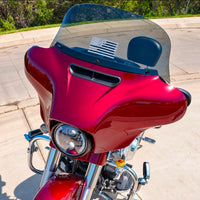
This is where recurve windshields make a difference.
Instead of pushing air straight back, they lift it — sending it over you instead of into you.
That’s why some riders go taller and still hate their setup…
while others run a shorter shield and feel completely dialed.
Go deeper here:
How to fix buffeting and choose the right windshield

— What It Feels Like When Wind Is Right
You don’t notice good wind management right away.
That’s the point.
The noise drops.
Your helmet stops shaking.
Your shoulders relax without thinking about it.
Instead of fighting the bike, you’re just riding it.
You’re not constantly adjusting your posture, bracing your core, or trying to find a “comfortable spot.”
And the longer you ride, the bigger the difference becomes.
What used to wear you out in an hour…
now feels easy for the rest of the day.
That’s the shift most riders don’t realize until after they fix it.
It’s not about comfort for a few minutes.
It’s about how much energy you’re wasting over miles.
When wind is right, everything else gets better:
your focus, your endurance, and how much you actually enjoy the ride.

— Why Most Windshields Don’t Fix It
This is where a lot of riders get frustrated.
They try a different windshield… and nothing really changes.
The mistake is thinking it’s just about height.
Taller doesn’t always mean better.
Shorter doesn’t always mean cleaner.
If the airflow is still hitting your helmet the wrong way,
you’re still going to get buffeting, noise, and fatigue — just in a different spot.
What actually makes a difference is how the air moves.
That’s where design comes in.
Windshields with a recurve shape help lift the air instead of just pushing it back.
So instead of hitting you, it flows up and over you.
That’s the difference between:
fighting wind all day…
and barely thinking about it.
That’s why we carry Freedom Shields.
Not because they’re “another windshield” —
but because they’re designed to fix the problem most riders are actually dealing with.
If you’re not sure what height you need, that’s the part that matters most.

— The Riding Triangle: How It All Works Together
Most riders upgrade one part at a time —
suspension, a windshield, bars, a seat — hoping each change fixes the ride.
Sometimes it helps. Sometimes it doesn’t.
Because your bike doesn’t work in parts — it works as a system.
The riding triangle is how your body sits on the bike.
Your seat, your handlebars, and your suspension all work together to define your position.
If one of those is off, everything else starts compensating.
You lean forward. You shift your weight. You fight the wind.
The bike never quite feels right — even after upgrades.
When the setup is right, you don’t think about it.
You’re relaxed, stable, and the bike feels like it fits you — not the other way around.

Where To Start — Fix The Right Thing First
If your bike feels exhausting on longer rides —
loud wind, helmet shake, tension in your shoulders —
you don’t need to change everything.
You need to fix the airflow.
Most riders don’t realize how much energy they’re wasting fighting wind.
Once it’s right, everything changes:
less noise, less fatigue, and a ride that feels calm instead of constant.
If this sounds like your bike, start here.
Coming Next In This Series
Question for you: what part of your ride wears you out the fastest?
