

The 3 Biggest Mistakes Riders Make When Upgrading a Harley Touring Bike (And What Actually Works)
The 3 Biggest Mistakes Riders Make When Upgrading a Harley Touring Bike
Upgrading a Harley touring bike should make the ride better.
More comfortable. More controlled. More enjoyable on long days.
But a lot of riders end up doing it backwards.
They start with whatever grabs their attention first —
louder exhaust, a random windshield, a part somebody recommended online —
and hope the rest of the bike comes together from there.
Sometimes that works.
A lot of the time, it just creates a more expensive version of the same problem.
The bike still feels harsh.
The wind still beats them up.
The setup still does not feel fully right for the way they actually ride.
The issue usually is not that the parts are bad.
It is that they were chosen in the wrong order, or for the wrong reason.
Harley touring bikes are big, heavy, and built for long miles.
Getting one to feel right is not about throwing random parts at it.
It is about understanding what actually changes comfort, control, and confidence on the road.
This post is the reset.
We are going to break down three of the biggest mistakes riders make when upgrading their touring bike —
and what tends to work better instead.
Because when the setup is right,
the bike does not just look better or sound better —
it feels better everywhere that matters.
— Mistake #1: Starting With Sound Instead of the Ride
For a lot of riders, the first upgrade is exhaust.
It’s easy to understand why.
Sound changes the personality of the bike immediately, and it makes the bike feel more exciting the second you fire it up.
The problem is that sound doesn’t fix what most riders are actually dealing with.
If the bike still feels harsh over bumps, if the wind is wearing you out on longer rides, or if the setup just doesn’t feel right,
louder pipes don’t solve any of that.
They make the bike more fun in the moment —
but they don’t improve comfort, control, or long-distance confidence.
That’s where a lot of riders get stuck.
They upgrade the sound, but the ride itself still feels the same.
Exhaust absolutely has its place.
But most experienced touring riders come to the same realization over time —
it works best after the foundation of the bike is already dialed in.
When the suspension feels right, the wind is under control, and the bike is comfortable for real miles,
that’s when sound becomes the final layer that brings everything together.
When you get to that point:
Explore TAB Performance slip-ons

— Mistake #2: Guessing on Wind Instead of Fixing It
A lot of riders know when their windshield setup is wrong.
They feel it in the helmet shake, the wind noise, the pressure on the chest, or that constant buffeting that slowly wears them down on longer rides.
But instead of fixing it with a clear plan, most riders guess.
They go a little taller.
Then a little shorter.
Then darker.
Then a different brand.
And a lot of the time, they still end up fighting the same problem.
That is because wind management is not just about throwing a bigger windshield on the bike.
It is about how the air moves around your height, your seat position, and the way you actually ride.
When the setup is wrong, the ride feels louder, rougher, and more tiring than it should.
When it is right, the whole bike feels calmer.
The air smooths out.
The helmet stops getting beat up.
And long miles become something you enjoy instead of just tolerate.
This is one of the biggest upgrade mistakes Harley touring riders make,
because they assume wind fatigue is just part of riding.
It is not.
And once riders experience a windshield setup that actually works,
they usually realize how much energy they were wasting fighting the wind the whole time.
Start here:
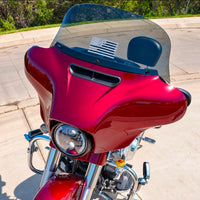
Learn about Freedom Shields wind management
Need help choosing height?
Use the Freedom Shields sizing guide

— Mistake #3: Buying Parts That Aren’t Built for How You Ride
This is the one most riders don’t realize they’re making.
They buy good parts — sometimes expensive parts —
but those parts were never set up for how they actually ride.
Rider weight.
Passenger.
Tour pack.
Luggage.
How often the bike is loaded down.
All of that changes how a touring bike behaves.
But most suspension setups are chosen without any of it being considered.
That’s why so many riders end up with a bike that still feels harsh,
still bottoms out,
or just never feels fully planted on the road.
It’s not because the parts are bad.
It’s because they weren’t built around the rider.
When suspension is actually matched to your weight and how you use the bike,
everything changes.
The rear end settles down.
The bike feels more controlled.
Big hits don’t feel as sharp.
And long rides stop beating you up.
This is where most riders realize what they should have done first.
Not just upgrade suspension —
but choose something that’s built for them, not just pulled off a shelf.
Start here:
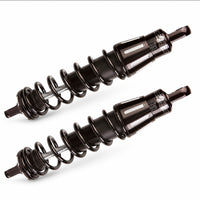
Learn how rider-specific suspension actually works
See options:
Explore Super Shox SR2 setups

— Start With The Setup, Not The Hype
That is really what all three of these mistakes come back to.
A lot of riders do not have a bad bike.
They just have a bike that has been upgraded in the wrong order.
Sound gets added before comfort is fixed.
Wind gets guessed at instead of measured.
Suspension gets replaced without ever being matched to the rider, passenger, or load.
The result is a bike with money in it —
but still not a bike that feels completely right on the road.
The riders who end up happiest with their setup usually do the same thing:
they stop chasing random parts and start fixing the ride in a more intentional way.
First, get the bike riding right.
Then calm the wind down.
Then dial in the personality with sound and performance.
That is how you build a touring bike that is not just more impressive on paper —
but genuinely better to ride for real miles.
If you want help getting it right the first time, we’ll walk through your setup with you.
