

Hoka Hey: A Good Day To Die
The Hoka Hey Motorcycle Challenge pushes riders and machines through roughly 10,000 miles of back roads, long days, changing weather, written directions, and very little room for mistakes.

Imagine riding 800 or 1,000 miles today.
Then imagine waking up tomorrow and doing it again.
And again.
The roads are not laid out for speed. You are not simply hammering down the Interstate. You are following written directions through back roads, small towns, mountain passes, remote stretches of pavement, and whatever weather shows up along the way.
Miss a turn badly enough and you may have to ride all the way back to where you left the route.
Get tired and the problem is not just that your body hurts.
Your decisions get slower. Navigation gets harder. Small problems become expensive. Gear that felt fine for two hours may suddenly feel unbearable after twelve.
That is what makes the Hoka Hey Motorcycle Challenge so fascinating.
It does not just test whether a motorcycle can cover a lot of miles.
It exposes what actually matters when a rider and a touring bike are asked to keep going long after a normal day ride would have ended.
You Do Not Have To Ride Hoka Hey To Learn From It
Most riders will never attempt 10,000 miles under Hoka Hey conditions.
But the lessons scale down surprisingly well.
The windshield that creates a little buffeting on a Sunday ride can become exhausting after ten hours.
The suspension that feels acceptable around town can beat you up after hundreds of miles of broken pavement.
Handlebars that look right can start making your shoulders, wrists, or neck miserable halfway through a long day.
Weak lighting matters more when the sun is gone, the road is unfamiliar, and wildlife is moving.
Poor maintenance, bad packing, inefficient fuel stops, weak hydration habits, and riding too long while fatigued all become harder to ignore when the mileage starts stacking up.
Hoka Hey does not create those problems.
It exposes them.
What Is The Hoka Hey Motorcycle Challenge?
Hoka Hey is not a normal motorcycle rally, and today it is not officially a race.
It is a long-distance motorcycle endurance challenge built around thousands of miles of secondary roads, unfamiliar territory, written route directions, limited outside assistance, and the expectation that the rider remains responsible for nearly every decision along the way.
Routes change from one Challenge to the next, but riders can expect roughly 10,000 miles of riding through small towns, rural highways, mountain roads, tribal lands, changing weather, darkness, and whatever conditions the route delivers.
The exact mileage changes, but Hoka Hey is built around serious long-distance endurance.
Secondary roads, small towns, mountain passes, and unfamiliar routes are part of the experience.
Riders are expected to navigate the prescribed route rather than simply following a GPS line.
The challenge is designed around rider responsibility, preparation, judgment, and perseverance.
That combination is what separates Hoka Hey from simply riding a very long motorcycle trip.
The mileage is difficult.
But the real test comes from trying to manage the mileage while also managing fatigue, navigation, weather, fuel, equipment, sleep, mechanical problems, and your own judgment.

From A Wild Idea To One Of Motorcycling's Toughest Challenges
The roots of Hoka Hey go back to Jim Red Cloud Durham and his wife, Elizabeth “Beth” Durham.
Jim imagined a motorcycle event that would demand more from riders than simply covering miles. The original concept centered on American V-twin motorcycles, difficult roads, personal endurance, and a larger purpose beyond reaching the finish.
Jim described a vision of riders being tested through hardship, becoming stronger through the experience, and ultimately using that strength to help others.
The first Hoka Hey Motorcycle Challenge took place in 2010.
Riders left Key West, Florida and headed for Homer, Alaska on what became an approximately 9,000-mile journey. The route crossed mountain ranges, reservations, forests, deserts, and some of the most remote stretches of road in North America.
The early events were much closer to an actual race and included substantial prize money.
Over time, the event evolved.
Hoka Hey became less about beating another rider and more about facing the road, the conditions, and your own limitations.
That is the foundation of the modern Challenge.
A Few Miles Through Hoka Hey History
No two Challenges have looked exactly the same.
Key West To Homer
The inaugural Challenge sent riders from the southern tip of Florida to Homer, Alaska, establishing the endurance-heavy DNA that still defines Hoka Hey.
Even Bigger
The following event stretched to roughly 14,000 miles, proving that Hoka Hey was never intended to become an easy or predictable touring event.
From Race To Endurance Challenge
The event increasingly shifted away from rider-versus-rider competition and toward endurance, accountability, charitable impact, and the personal test of finishing the prescribed route.
A Growing Community
Hundreds of riders now gather for each Challenge, while returning veterans, rookies, families, charities, sponsors, and supporters follow the ride from all over the country.
More Than 10,000 Miles — Riding For Something Bigger
The physical challenge gets most of the attention.
But charity and service have been part of the Hoka Hey story from the beginning.
Jim's original vision was closely connected to raising awareness for Native American communities and encouraging riders to use their strength and visibility to help others.
That mission has expanded over the years.
Take On Something Difficult
The Challenge asks riders to push through discomfort, uncertainty, fatigue, and adversity.
Turn Miles Into Impact
Riders are encouraged to use their participation to raise money and awareness for causes that matter to them.
Make The Ride About More Than Yourself
The finish means more when the effort behind it helps someone beyond the rider sitting on the motorcycle.
Over the years, Hoka Hey riders have collectively raised millions of dollars for charitable causes. Individual riders have supported veterans, children, Native communities, medical organizations, local nonprofits, and causes with deeply personal connections.
Hoka Hey even recognizes fundraising achievement through the Wacantognaka Honorary Award, reinforcing the idea that one of the most meaningful accomplishments can happen far beyond the finish line.

The Rules Are Part Of What Makes Hoka Hey Different
Hoka Hey is difficult by design. The rules remove many of the conveniences riders normally rely on during a long trip.
The current 2026 rules are built around self-reliance, following the prescribed route, making your own decisions, and proving that you completed the Challenge within the spirit of the event.
Follow The Written Route
Riders must follow the prescribed driving directions. If you stray from the route, you are expected to return to the point where you left it before continuing.
No GPS Shortcut
Electronic navigation that pinpoints your location, identifies upcoming turns, or helps locate other riders is restricted. Mounted GPS units and electronic mapping programs are not supposed to be used for navigation during the Challenge.
No Outside Navigation Help
Family, friends, sponsors, and non-participants cannot guide you along the route, tell you where other riders are, or feed you information that removes the navigation challenge.
No Traveling Support Crew
Support vehicles are not allowed to follow riders along the route. Family and friends can meet riders at designated checkpoints for moral support and certain supplies, but they cannot function as a chase vehicle or mobile repair crew.
The Tracker Matters
Riders carry tracking equipment that allows organizers to review the route, movement, speeds, and start-stop history during validation.
Checkpoints Are Mandatory
Riders are required to check in at designated checkpoints, and organizers can also use surprise or unannounced checkpoints along the route.
Going Faster Is Not The Same As Making Better Time
One of the easiest misconceptions about Hoka Hey is that the riders at the front simply ride faster.
The modern Challenge is not officially a race, and the rules require riders to obey applicable traffic laws.
A moving violation can cost a rider official Finisher recognition, and the organizer can review tracking history and reported speeds when validating a rider's Challenge.
Efficient fuel stops, fewer navigation mistakes, good preparation, smart rest, and a sustainable pace can save far more time than trying to make up minutes with speed.
The 2026 rules go even further: a tracker-recorded speed above 99 mph is considered reckless and grounds for automatic disqualification.
Hoka Hey rewards consistency far more than heroics.

Even Rest Is Part Of The Challenge
This is where Hoka Hey becomes very different from a normal cross-country motorcycle trip.
Under the current rules, riders seeking official recognition are expected to remain on the prescribed route and avoid staying indoors unless specifically permitted by the organizers.
For Elite and Bad Ass recognition, the restrictions are even tighter. Riders are expected to rest outdoors and avoid the conveniences most travelers would normally consider routine.
Stop And Reset
- Hotel room
- Long shower
- Restaurant meal
- GPS navigation
- Planned overnight destination
Adapt To What The Road Gives You
- Simple outdoor rest system
- Unknown conditions ahead
- Written route directions
- Limited outside assistance
- Get up and do it again
That changes the way experienced riders think about gear.
A sleep setup that takes twenty minutes to unpack and another twenty minutes to put away may be comfortable, but it is also forty minutes that could have been spent sleeping.
The same thinking applies to rain gear, luggage, hydration, tools, and almost everything carried on the bike.
Every item has to earn the space it takes.
Finishing The Miles Is Only Part Of Finishing Hoka Hey
Getting physically to the finish line does not automatically guarantee official recognition.
Organizers review tracking information and compliance with the rules before validating the ride.
The tracker needs to show that you completed the prescribed route.
Missing a required checkpoint can jeopardize official Finisher status.
Traffic violations, prohibited navigation assistance, or reckless riding can change the outcome.
Tracking history and event records are reviewed before recognition is finalized.
That is an important distinction.
Hoka Hey is not simply asking whether you can ride 10,000 miles.
It is asking whether you can ride those miles the Hoka Hey way.
What Hoka Hey Veterans Tell New Riders
The best advice usually does not sound dramatic. It sounds simple because experienced riders have already learned what actually matters.
Across Hoka Hey rider interviews and returning-rider stories, the same lessons keep showing up: carry less, hydrate constantly, practice the written directions, keep your stops efficient, simplify your sleep system, and know when fatigue is starting to make decisions for you.
Pack Less Than You Think You Need
Multiple returning riders have said the same thing after their first Challenge: they carried too much.
Every extra tool, shirt, bag, and “just in case” item has to be packed, unpacked, secured, and hauled for thousands of miles.
Drink Without Waiting For A Gas Stop
Hydration is one of the most repeated pieces of advice from experienced Hoka Hey riders.
A hydration bladder or reservoir with a hose accessible from the saddle allows a rider to drink steadily instead of realizing hours later that dehydration has already started affecting focus.
Practice Written Directions Before The Challenge
Hoka Hey veterans repeatedly tell rookies to practice following written directions before lining up at the start.
Reading a route sheet while fresh is one thing. Reading it at night after a very long day is something completely different.
Make Stops Efficient, Not Comfortable
Some riders have reported cutting normal 15-minute fuel stops down to a few focused minutes.
Over dozens of stops, those minutes add up to hours without requiring the rider to go one mile per hour faster.
Keep The Sleep System Simple
Experienced riders often recommend a quick, minimal sleep setup instead of turning every rest stop into a campsite.
If it takes twenty minutes to set up and twenty minutes to pack away, that may be forty minutes that would have been more valuable as actual sleep.
Know When Your Brain Is Getting Slower
Fatigue does more than make a rider tired. It makes navigation harder, reactions slower, and simple mistakes easier to miss.
Veteran accounts repeatedly describe missed turns and poor decisions becoming more common once the rider starts running out of steam.
Pack Less. Sleep More. Keep Moving.
Veteran riders have phrased it differently over the years, but the underlying idea is remarkably consistent.
Hoka Hey riders have repeatedly admitted that they used only a fraction of what they packed on their first attempt.
A complicated sleep setup may look comfortable in the garage and become frustrating when every minute counts.
Efficient stops, fewer mistakes, and a sustainable rhythm often matter more than chasing speed.

Choose Gear For The Worst Hour Of The Ride
Long-distance gear is not just about what feels comfortable leaving the driveway.
It has to work after dark, in rain, through temperature changes, and when the rider is already tired.
All-Weather Riding Gear
Some Hoka Hey riders favor waterproof or all-weather riding suits because they reduce the need to stop and repeatedly add or remove rain gear.
Gloves That Work Wet
Cold or soaked hands affect throttle control, clutch feel, braking, and concentration. Backup gloves or proven waterproof options can matter more than riders expect.
Directions You Can Actually Read
Route-sheet placement, reading glasses if needed, night illumination, and weather protection all need to be tested before the event.
Night Riding Changes Everything
Veteran advice is blunt: you will ride at night. Better lighting can help identify animals, curves, road debris, and unfamiliar pavement sooner.
Carry What You Can Actually Use
A compact tool kit focused on likely roadside problems makes more sense than hauling tools for repairs you cannot realistically perform beside the road.
Make Nutrition Easy
Food that can be carried, eaten quickly, and tolerated after hours in the saddle usually beats complicated meal plans that require long stops.
Fatigue Often Shows Up In The Directions First
A tired rider may still feel physically capable of continuing.
But Hoka Hey adds another test: can you still read, interpret, and execute written directions correctly?
Attention narrows and simple decisions begin taking more effort.
The mistake may not be obvious immediately on unfamiliar back roads.
The rider may have to return to the point where the prescribed route was left.
There are rider stories where a navigation mistake eventually created hundreds of miles of unnecessary backtracking.
That creates one of the most important Hoka Hey lessons of all:
The smartest rider is not always the rider who can stay awake the longest.
Sometimes it is the rider who recognizes when another hour of riding is about to become slower, less efficient, and less safe than getting some rest.
Ride Your Own Ride
This may be the simplest advice in Hoka Hey.
It may also be the hardest to follow.
Someone will always leave the gas station before you. Someone will sleep less. Someone will ride faster. Someone will seem stronger on Day 2.
None of that tells you what your body, your motorcycle, or your situation needs.
A faster rider may be operating on a completely different fatigue level, experience base, or strategy.
A longer stop or short sleep does not automatically mean the Challenge is getting away from you.
The road does not care how tough you wanted to look at the previous gas station.
Sustainable pace, clean navigation, hydration, and good decisions compound over thousands of miles.
10,000 Miles Doesn't Create Problems — It Exposes Them
A touring bike can hide a lot of small problems on a 100-mile ride. Hoka Hey gives those problems thousands of miles to introduce themselves.
A little helmet buffeting becomes hours of neck strain. A harsh rear suspension becomes thousands of impacts through your back. Handlebars that are slightly wrong become sore wrists and shoulders. Weak lighting becomes a serious limitation after dark.
Even an engine combination that feels impressive around town can become tiring if it runs hot, has poor throttle response, or makes the rider work harder than necessary.
Your Back Shouldn't Be The Shock Absorber
Suspension is easy to ignore when the road is smooth.
Then the pavement breaks up.
Expansion joints, potholes, bridge transitions, washboard pavement, mid-corner bumps, loaded saddlebags, and thousands of miles of imperfect roads start asking the suspension to do its job over and over again.
If the rear of the bike is harsh, under-sprung, poorly damped, or simply not set up for the rider and load, that energy gets passed somewhere else.
Usually into the rider.
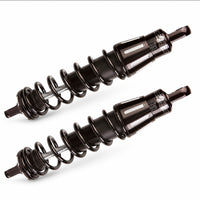
This is why we spend so much time talking about suspension as a rider-comfort and control issue, not simply a performance upgrade.
If you want to understand how rider-specific suspension changes a Harley touring bike, start with our Super Shox suspension guide .
And because Legend Suspension comes up frequently in long-distance Harley conversations, we've also broken down the differences in our Super Shox vs. Legends comparison .
Fighting The Wind Is Still Work
Wind fatigue is sneaky because nothing has to hurt immediately.
Your helmet moves a little. Your neck muscles keep correcting it. Wind noise stays constant. Your upper body pushes against turbulent air for hour after hour.
None of those things seem dramatic by themselves.
After a full day in the saddle, they can become exhausting.
The answer is not automatically the tallest windshield you can bolt onto the motorcycle.
Good wind management is about getting the airflow where you want it while maintaining visibility, comfort, and clean air around the helmet.
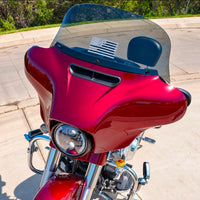
Our Freedom Shields wind-management guide explains why windshield shape, thickness, recurve, and airflow matter.
If you're trying to determine the right height for your bike, use our Freedom Shields windshield sizing guide before guessing.

An Inch Matters After Ten Hours
Handlebars are often chosen because of how they make the motorcycle look.
Long-distance riders eventually learn to care more about where those bars put their body.
Reach, wrist angle, shoulder position, elbow bend, and bar height all change how much effort the rider uses just to maintain a normal riding position.
Bad angles become pressure and numbness.
Too much reach keeps muscles working all day.
Poor posture compounds with wind fatigue.
Rider position changes how the entire body absorbs the ride.
The correct bar is not simply the tallest or most aggressive-looking option.
It is the one that puts the rider in a relaxed, repeatable position that still feels good hundreds of miles later.
If your current setup has you reaching, slouching, or loading your wrists, our KST Kustoms handlebar collection is a good place to start looking at different touring bar options.
The Road Changes When The Sun Goes Down
Hoka Hey veterans repeatedly talk about lighting for a simple reason:
You are going to ride at night.
And night riding on unfamiliar secondary roads is very different from riding a familiar highway after dark.
Better lighting is not just about creating the brightest wall of light possible.
Beam pattern, distance, peripheral coverage, glare, mounting position, and reliability all matter.
And just like every other serious touring upgrade, auxiliary lighting should be tested through real night miles before depending on it far from home.
Usable Power Matters More Than A Dyno Number
An endurance ride is not the place where peak horsepower matters most.
What matters is how the motorcycle behaves every time you roll into the throttle.
Smooth response. Strong usable torque. Predictable passing power. Manageable heat. And a combination that has already proven reliable.
Peak Horsepower
Fun to talk about, but it tells only one part of the story.
Broad, Usable Torque
The kind of power you feel leaving a corner, passing traffic, climbing grades, and carrying a loaded touring bike.
That's why we look at touring performance differently than a pure dyno build.
Our Harley touring power guide explains why torque delivery often matters more to a real-world touring rider than chasing the biggest horsepower number.
Exhaust is part of that system too. If you're looking at sound, throttle feel, and a more complete touring setup, our TAB Performance guide explains the options without turning the decision into a spec-sheet contest.
The Best Upgrade Is The One That Keeps The Bike Moving
A Hoka Hey bike does not need to be the most modified motorcycle at the starting line.
It needs to work.
Tires, wheel bearings, brakes, fluids, battery condition, charging system, fasteners, belt or drivetrain condition, lights, suspension hardware, and basic electrical connections suddenly matter a lot more when the next familiar garage may be thousands of miles away.
Enough life for the mileage and conditions ahead.
Inspect pads, fluid, rotors, and anything that already feels questionable.
Battery, charging, wiring, connectors, lighting, and added accessories.
Anything that vibrates loose at 300 miles can still vibrate loose at 6,000.
Start with service intervals that make sense for the mileage you are actually about to ride.
Do not knowingly leave with a small problem and hope 10,000 miles will ignore it.
Before any serious long-distance trip, the boring checks are often the most important ones.
Our long-ride motorcycle maintenance checklist covers the areas worth inspecting before the mileage starts stacking up.
A Touring Bike Is A System
Suspension does not operate separately from rider position.
Wind management does not operate separately from neck fatigue.
Lighting does not operate separately from nighttime concentration.
Engine setup does not operate separately from heat, throttle control, and rider effort.
And none of it matters very much if the motorcycle is sitting beside the road with a preventable mechanical problem.
You Do Not Have To Ride Hoka Hey To Use The Lessons
Hoka Hey is the extreme version of problems every long-distance rider eventually runs into.
Most riders will never attempt 10,000 miles under Hoka Hey rules.
But plenty of riders will spend a week crossing the country, ride 600 or 700 miles in a day, push through unexpected weather, arrive somewhere after dark, or discover halfway through a trip that their motorcycle is wearing them out faster than expected.
The difference is mostly scale.
Buffeting, noise, neck strain, and poor rider position begin becoming harder to ignore.
Suspension, handlebars, seating position, hydration, and fatigue begin affecting how well you ride.
Fuel stops, food, weather gear, navigation, and wasted time start changing the entire day.
Reliability, recovery, maintenance, sleep, and bike setup become more important every morning you get back on.
That is why serious touring riders eventually stop looking at their motorcycle as a collection of individual parts.
Everything affects something else.
Better suspension can reduce physical fatigue. Better wind management can reduce neck strain and mental fatigue. Better ergonomics can reduce the effort required just to sit on the bike. Better lighting can improve confidence when the day runs longer than expected.
And better preparation can keep a small problem from becoming the reason the trip ends early.

The Priorities Get Pretty Simple
Spend enough time around serious long-distance riders and eventually the conversation changes.
The flashiest upgrade matters less.
What matters is whether the bike helps you keep riding well.
Do not wait until your body is already asking for water.
Recognize when continuing is becoming less productive than resting.
Reduce the unnecessary physical work being transferred to the rider.
Save time without needing to save it with speed.
Test gear, inspect the motorcycle, and solve known problems before leaving home.
Your pace has to work for your motorcycle, your body, and the conditions in front of you.
The Bike That Looks Best In The Parking Lot Is Not Always The Bike You Want At Mile 800
Touring motorcycles have always lived in two worlds.
We want them to look right. We want them to sound right. We want them to feel like ours.
There is nothing wrong with that.
But once the miles start getting serious, another question begins to matter more:
That question is at the center of our Harley Touring Myth article, because many riders eventually learn that the best touring upgrades are not always the ones somebody notices first.
They are often the ones you notice after ten hours.
Hoka Hey Has A Way Of Stripping Riding Down To What Matters
Ten thousand miles sounds like the story.
It is not.
The real story is what happens somewhere between the starting line and the finish.
Riders learn what they actually need.
They learn what they carried and never used.
They learn which motorcycle problems were small at home and enormous after thousands of miles.
They learn that sleep can sometimes save more time than riding tired.
They learn that the person they were chasing probably was not the person they needed to be racing against anyway.
And many of them turn those miles into something bigger by raising money and awareness for people and causes that matter to them.
That may be the best lesson Hoka Hey gives the rest of us.
The point of building a better touring motorcycle is not simply owning a better motorcycle.
It is being able to go farther, stay sharper, experience more, and keep riding when the road gets hard.
Start With What Is Wearing You Out
If your touring bike is beating up your back, pushing your helmet around, putting pressure on your wrists, or simply making long days harder than they should be, do not start by throwing random parts at it.
Start with the problem.
